The Extremely Specific Code of Conduct You've Established for a Public Space That Doesn't Know You Exist
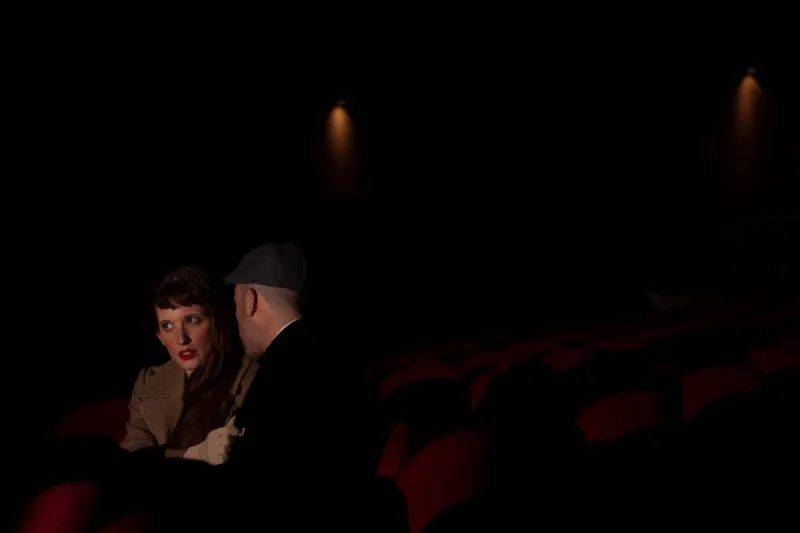
The Extremely Specific Code of Conduct You've Established for a Public Space That Doesn't Know You Exist
You didn't come here for conflict. You came for a large popcorn, a medium Coke that you're going to finish before the movie even starts, and two hours of complete cinematic immersion. That's all you wanted. That's a reasonable thing to want.
And yet, within four minutes of sitting down, a stranger three rows in front of you has already committed two violations — two — of a behavioral code they have never seen, were never informed of, and could not possibly have known existed.
This is the movie theater experience. Welcome.
Article One: The Armrest Convention
The armrest situation has a solution, and it is elegant in its simplicity. Each seat has two armrests. You share one with the person on your left, one with the person on your right. The unspoken rule — your unspoken rule, the correct one — is that whoever arrives first establishes occupancy, and the other party adapts accordingly.
This person next to you arrived after you. You were already settled, already positioned, already using the armrest in the way a person uses an armrest they have legitimately claimed. And yet somehow, without acknowledgment, without even a glance in your direction, they have placed their entire forearm directly on top of yours and are now using it with the casual confidence of someone who owns this theater.
You do not say anything. You simply perform a slow, deliberate retraction of your arm — a movement so controlled it communicates everything — and relocate to a position of dignified discomfort for the next 127 minutes.
This is fine. You are fine.
Article Two: The Phone Screen Incident
The previews are still running — not even the movie yet, just the previews — and the guy in your row is on his phone. Full brightness. No reduction. Just a small, blazing rectangle of light cutting through the darkness like a lighthouse beacon aimed directly at your peripheral vision.
You understand that people have lives. Emergencies happen. Someone might need to be reached. You are not unreasonable. You have built a grace period into your code: phones are tolerable during previews, acceptable on silent during the first five minutes of runtime if something genuinely urgent is happening, and then — by every law you have ever written — they go away.
The movie has started. The phone is still out. He is scrolling. He is scrolling. Through what? What could possibly require scrolling right now? You paid fourteen dollars to be here. You made a whole event out of this. And this man is browsing the internet as if he's in his own living room, completely immune to the psychic distress you are projecting at him from eight feet away.
You clear your throat. Softly. Pointedly. He does not look up.
You clear it again.
He puts the phone away forty seconds later, possibly because of you, possibly entirely unrelated to you. You will never know. You choose to believe it was because of you.
Article Three: The Snack Noise Protocols
Popcorn is loud. Everyone knows this. Popcorn is an accepted loud snack — it has been grandfathered in, it has institutional legitimacy, it is part of the theater ecosystem and you respect that. What you do not respect is the bag.
The bag. The rustling, crinkling, never-ending excavation of the bag that apparently contains an infinite supply of popcorn at the very bottom, always at the bottom, requiring constant digging with the acoustic subtlety of someone assembling furniture during a library reading.
Your personal code on this matter is clear: reach in, grab a reasonable quantity, withdraw your hand, eat. Simple. Clean. Efficient. A two-second operation. What this woman in the row behind you is doing cannot be described as a two-second operation. She has been in that bag for what feels like a continuous, unbroken stretch of four commercial breaks.
You have, over the years, developed a snack hierarchy in your head. Popcorn: acceptable, loud but forgivable. Candy with a soft package: ideal, practically silent, the considerate choice. Candy in a hard plastic shell that rattles: a war crime committed against everyone within a six-seat radius. Anything involving a wrapper that must be opened slowly — the kind of person who opens a wrapper slowly, one millimeter at a time, believing that slow equals quiet — is somehow worse than the person who just rips it open in one go and gets it over with.
At least the ripper is efficient. At least the ripper respects everyone's time.
Article Four: The Seat Kicking Clause
You don't need to elaborate on this one. You just need it on record.
Once: an accident. You acknowledge accidents. You are a fair legislator.
Twice: a pattern.
Three times: a declaration of intent.
The child behind you is currently on six.
The Verdict
Here's the thing about your movie theater code of conduct: it is entirely reasonable, completely unenforceable, and shared, in various slightly different forms, by every single other person in this building. The woman rustling the bag has her own strong opinions about people who talk during trailers. The phone guy has a deeply held belief about seat recliners. The armrest person probably thinks you're the one who violated protocol.
Every person in this theater has written their own invisible rulebook. None of them match. All of them are correct.
You eat the last of your popcorn, settle into your seat, and decide that next time you're going to the 10 AM showing on a Tuesday.
There is no 10 AM showing on Tuesday that's convenient for your schedule.
You'll be back on Friday night. Row E. Same armrest. Same code.
Same outcome.