The Internal Courtroom Drama That Erupts Every Time You Want to Buy Something Completely Unnecessary

You already know you're going to buy it. You knew the moment you saw it. Your hand was basically already reaching for your credit card before your conscious mind even registered what was happening. And yet — somehow, inexplicably — you are now forty minutes deep into an internal legal proceeding that would make a Supreme Court hearing look casual.
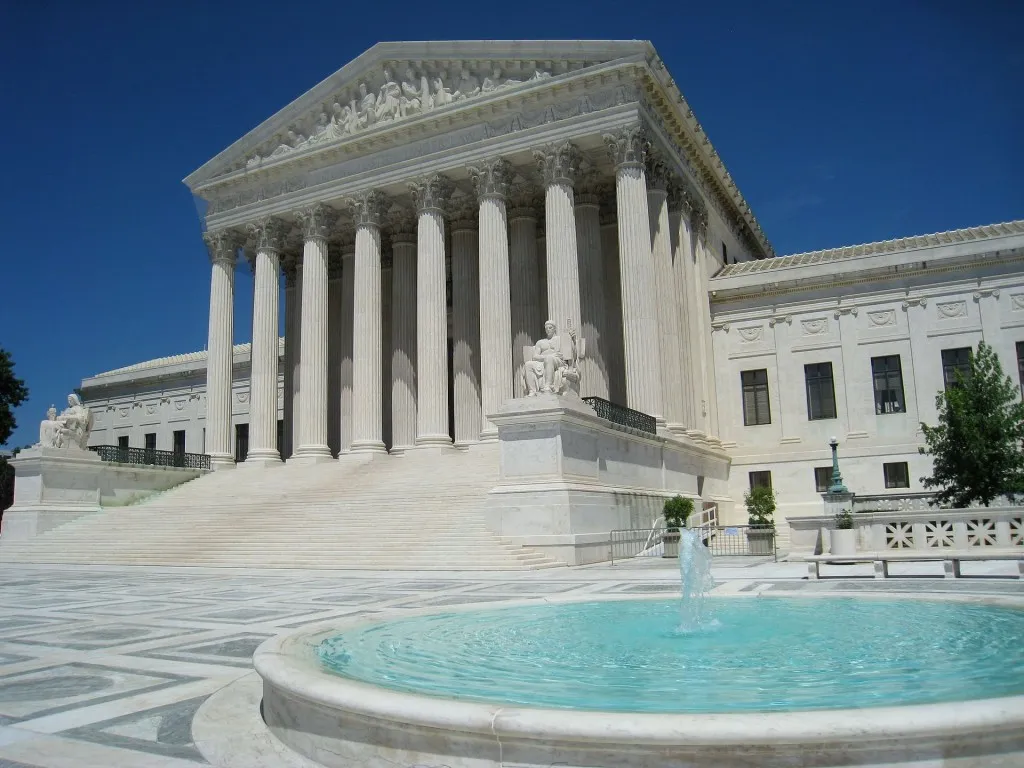 Photo: Supreme Court, via www.newyorkappellatelawyer.com
Welcome to the Purchase Justification Tribunal. Court is in session.
The Opening Arguments
The defense attorney — let's call her Desire — opens with a compelling statement. She's smooth, well-dressed in your imagination, and she speaks with the quiet confidence of someone who has won every single one of these cases. Her argument is simple: you want it, you work hard, you deserve it, and frankly, the prosecution is wasting everyone's time.
The prosecutor — Guilt, obviously — counters immediately. He's wearing a rumpled suit and carrying a manila folder stuffed with your bank statements, your credit card balance, and a printed screenshot of that savings goal you set in January and have not once looked at since. He clears his throat dramatically and asks the court to consider Exhibit A: the last seventeen things you bought that are currently sitting in a closet, a drawer, or — in one memorable case — still in the original shipping box.
The jury? Twelve members of your Amazon purchase history, staring at you with absolutely no emotion whatsoever.
The Cost-Per-Use Calculation Phase
This is where things get genuinely unhinged. At some point during the proceedings, your brain introduces the cost-per-use argument, and suddenly you are doing math that would impress an economist.
It's a $38 candle. A candle. But if you burn it for approximately two hours per evening, three evenings a week, and it lasts — conservatively — forty hours, then you're looking at roughly twenty sessions, which brings your per-session cost to under two dollars, which is honestly less than a cup of coffee, and you buy coffee every single day without a second thought, so really, when you frame it that way, the candle is the financially responsible choice.
You have now spent more mental energy on this candle than you spent choosing your last apartment.
The Imaginary Future Scenarios
When the cost-per-use math starts to feel shaky, the defense pivots to what legal scholars might call the Hypothetical Life Enrichment Argument. This is where you construct an elaborate future scenario in which the item you're considering becomes genuinely essential to your survival and wellbeing.
The $90 cast iron skillet? You're going to start cooking real meals. Proper meals. The kind your grandmother made, slow and intentional, with ingredients you bought at a farmers market you're also now definitely going to start attending. This skillet is not a purchase. It is a lifestyle transformation.
The $22 resistance band set gathering digital dust in your cart? Picture yourself six months from now — leaner, more disciplined, the kind of person who does a full workout in their living room before 7 AM without complaining. The resistance bands are the first step. They are the cornerstone of a new you. Refusing to buy them is essentially refusing to become that person.
The prosecution objects. The jury looks skeptical. You add the resistance bands to your cart anyway.
The Comparison Witness
No trial is complete without a witness called purely for emotional impact, and the Purchase Justification Tribunal always saves its best for last: the Comparison Witness, otherwise known as What Other People Spend Money On Without Blinking.
Your coworker just got back from a weekend in Nashville. Your college friend just posted photos from a trip to Portugal. Your neighbor bought a new truck. Meanwhile, you are standing in a TJ Maxx holding a $14 picture frame and conducting a full ethical review of whether you deserve it.
The defense rests. The prosecution sighs heavily. The jury of your Amazon purchase history shifts uncomfortably in their seats.
The Verdict
You buy the thing. You were always going to buy the thing. The entire proceeding was, in retrospect, a formality — a ritual your brain insists on performing to maintain the illusion that you are a thoughtful, deliberate person who makes considered financial decisions rather than someone who just really wanted a candle.
The item arrives three days later. You feel a brief, warm surge of satisfaction. You place it on a shelf. You do not think about the trial.
Until next time. And there is always a next time. Court reconvenes the moment you open a new browser tab.