The Midnight Commerce Spiral: How Your Brain Turns a Random Purchase Into a Life-Changing Investment

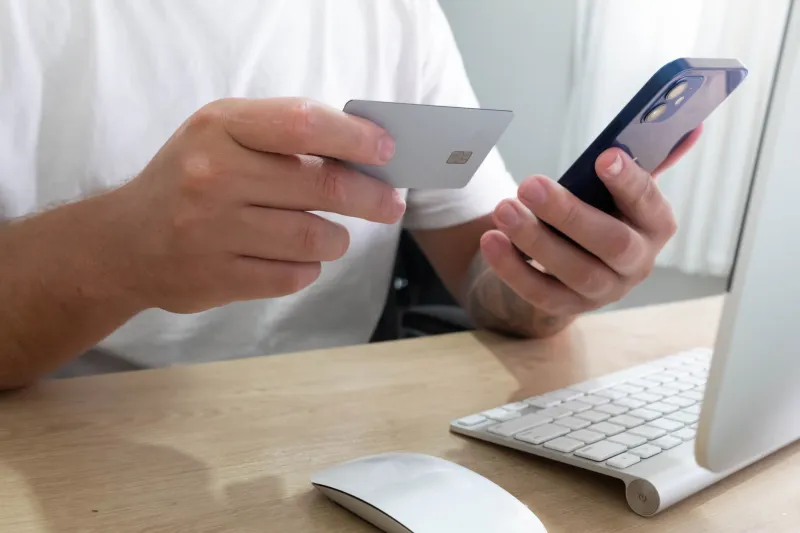
It started innocently. You were just checking your email. Maybe scrolling Instagram for five minutes before bed. Nobody warned you that a single sponsored post for a weighted blanket could trigger a 90-minute internal legal proceeding that ends with your credit card number typed in from memory.
But here you are. Cart loaded. Finger hovering. And your brain, which has been largely useless all day, has suddenly become the most persuasive attorney in North America.
Phase One: The Accidental Discovery
You didn't go looking for it. That's the thing you'll keep reminding yourself about later. It found you. Which, if you think about it, means the universe is probably trying to tell you something.
The item — let's say it's a standing desk converter, or a pasta extruder, or a very specific kind of LED light that clips onto a book — appears in your feed like a sign from the retail gods. You click, just to look. You are absolutely not going to buy anything. You are a responsible adult who has a budget and a savings goal and a vague memory of deciding to stop impulse shopping after the last time.
The price appears. It's $147.
Your brain begins warming up its engines.
Phase Two: The Economic Reframing
Normal math would suggest that $147 is $147. Midnight math operates on an entirely different set of principles.
First, there's the sale. It was $210 — which means you're saving $63. And here's the thing about savings: if you don't take them, you're essentially losing money. Buying this item is, financially speaking, the conservative choice. Your brain presents this argument with the confidence of someone who has a business degree, despite the fact that you were an English major and haven't thought about economics since sophomore year.
Then comes the per-day calculation. A hundred and forty-seven dollars sounds like a lot. But spread across, say, five years? That's less than nine cents a day. You spend more than that on a single pump of fancy hand soap. This purchase is, by any reasonable metric, practically free.
You feel a small, warm glow of financial wisdom.
Phase Three: The New-You Projection
This is where things get genuinely cinematic. Because the item stops being just an item. It becomes a portal.
The standing desk converter isn't a piece of furniture — it's the beginning of a new relationship with your body and your work. You'll stand in the mornings. You'll have better posture. You'll be the kind of person who talks about their posture at dinner parties. You'll be more productive, more energized, more the person you've always kind of felt you were on the inside but haven't quite accessed yet due to, honestly, probably sitting too much.
The pasta extruder means you start cooking real meals. Sunday dinners. Homemade linguine. Your apartment smells incredible. People come over and are impressed. You are impressive.
The clip-on book light means you finally read before bed instead of doomscrolling, which means better sleep, which means a better morning routine, which means everything gets better, cascading outward in every direction like a beautiful, life-improving domino effect — all triggered by this one $147 purchase at 12:23 AM.
Your brain shows you a highlight reel of your future self. They look great. They're so well-rested.
Phase Four: The Necessity Argument
By this point, the question is no longer whether to buy it. The question is whether you can afford not to.
You've needed this for a while, actually. You just didn't have the language for it before tonight. You've been struggling with exactly the problem this product solves — you can see that so clearly now. The fact that you didn't know this product existed until 41 minutes ago is irrelevant. The need was always there. This is simply the moment of recognition.
You check the reviews. They are, predictably, either five stars or one star, with nothing in between. You read four of the five-star ones and feel validated. You scroll past the one-star reviews because those people clearly used it wrong.
Phase Five: The Point of No Return
Checkout is fast. It's disturbingly fast. The site has your card saved, your address pre-filled, your one-click purchase option glowing softly like a lighthouse guiding you home.
You hit confirm. A cheerful confirmation email arrives in seconds. The deed is done.
Your brain, its work complete, immediately clocks out and goes quiet. The courtroom empties. The lawyers pack up their briefcases. The projector showing your future self gets switched off.
You look at the confirmation email. One hundred and forty-seven dollars. Estimated delivery: five to seven business days.
The Morning After
You wake up and check your email before you're fully conscious, which is how you find the order confirmation before you've had coffee. You read the product name. You read the price. You sit with it for a moment.
The standing desk converter — or pasta extruder, or clip-on light — feels slightly less transformational in the daylight. The math that made so much sense at midnight has reverted to regular math. One hundred and forty-seven dollars is, it turns out, one hundred and forty-seven dollars.
You briefly consider returning it. You look up the return policy. It's not impossible, just annoying enough that you probably won't.
So you decide to keep it. And honestly? This time you're actually going to use it.
Your brain, sensing an opening, starts warming up its engines again.