The Oscar-Worthy Performance Required to Leave a Store Empty-Handed Without Crushing Someone's Soul

The Trap is Set
It begins innocently enough. You're walking past that new phone case kiosk at the mall, or maybe you ducked into a mattress store to escape the rain, or perhaps you made the fatal mistake of making eye contact with someone through the window of a car dealership. Whatever the scenario, you've now triggered what behavioral scientists probably call "the retail engagement protocol" and what you're about to experience as "psychological warfare disguised as customer service."
The salesperson approaches with the enthusiasm of someone who's been waiting their entire career for you specifically to walk through that door. Their smile could power a small city. They've already mentally spent their commission from your theoretical purchase. There's no going back now.
Act I: The Opening Gambit
"Just looking!" you declare with the confidence of someone who definitely has a plan and is absolutely not about to be emotionally manipulated into buying a $3,000 adjustable bed frame. This is your first mistake. You've revealed your hand too early, and now they know exactly what kind of challenge they're dealing with.
"Of course!" they respond, with the knowing smile of someone who's heard this exact phrase 847 times this month and has successfully converted 632 of those browsers into buyers. "Let me know if you have any questions. By the way, we're having a special promotion today only..."
And just like that, you're trapped in retail purgatory.
The Escalating Performance
What follows is an increasingly elaborate performance art piece where you pretend to be someone who might theoretically be interested in purchasing something while simultaneously trying to communicate that you are definitely not going to purchase anything, all while avoiding hurting the feelings of someone who's just trying to do their job.
You start touching things with the fake interest of a method actor preparing for a role as "Person Who Shops for Things." You nod thoughtfully at product features you don't understand. You make appreciative "hmm" sounds at price points that make your credit card weep in your wallet.
"This is really nice," you hear yourself saying about a memory foam mattress topper that costs more than your rent, as if you're someone who has opinions about thread counts and knows what "gel-infused cooling technology" means.
The Fictional Backstory Emerges
Somewhere around the fifteen-minute mark, you realize you need to justify your continued presence in this store, so your brain starts generating an elaborate fictional scenario to explain why you're here but not buying anything.
"I'm actually shopping for my sister," you find yourself saying, despite being an only child. "She's very particular about firmness levels." Now you're committed to this lie, and you have to maintain character consistency. Your imaginary sister probably has back problems. She's probably moving next month. She definitely needs to "think about it" and "measure her space."
The salesperson nods sympathetically and starts explaining the return policy for your fictional sister's theoretical purchase, while you mentally cast actresses to play this character you've created.
The Technology Trap
Modern retail has evolved beyond simple human-to-human manipulation. Now there are apps to download, QR codes to scan, email lists to join "for exclusive offers." Your phone becomes a prop in this elaborate production as you pretend to be someone who might want push notifications about mattress sales.
"I'll just take a picture to show her," you say, photographing a price tag like you're documenting evidence at a crime scene. Your camera roll now contains seventeen photos of furniture you will never own, creating a digital museum of your retail theater performances.
The salesperson helpfully suggests you sign up for their text alerts "in case anything changes with the pricing." You're now subscribing to updates about products you never intended to buy, for a person who doesn't exist, in a store you never planned to enter.
The Fake Phone Call Gambit
Desperation leads to the performance technique that's gotten more people out of awkward situations than any other: the fake phone call. Your phone "rings" at the perfect moment (thank you, scheduled alarm), and suddenly you're having an urgent conversation with someone who definitely exists and absolutely needs you somewhere else immediately.
"Oh no, really? Right now?" you say to your voicemail, shaking your head with the disappointment of someone whose important plans have been tragically disrupted. "I'm so sorry," you tell the salesperson, "I have to run. Family emergency."
Now you've committed to this narrative arc, and you have to sell the performance. You look genuinely regretful about leaving this mattress store where you were definitely about to make a major purchase before life intervened.
The Guilt-Laden Exit Strategy
But even with your Oscar-worthy phone call performance, you can't just bolt for the door. That would be rude. Instead, you have to execute a complex emotional choreography where you express genuine regret about not being able to complete this fictional transaction today.
"I'll definitely be back," you promise, knowing full well that you'll take a different route through the mall for the next six months to avoid this exact situation. "Thank you so much for your help. You've been amazing."
The salesperson hands you their business card with the hope of someone watching a lottery drawing. You accept it with the solemnity of someone receiving a sacred artifact, knowing it will live in your wallet for approximately three days before being transferred to that drawer where business cards go to die.
The Aftermath
You finally escape into the parking lot, having successfully purchased nothing while somehow feeling like you've just completed a marathon. Your phone buzzes with a text: "Hi! This is Derek from Mattress World! Thanks for stopping by today!"
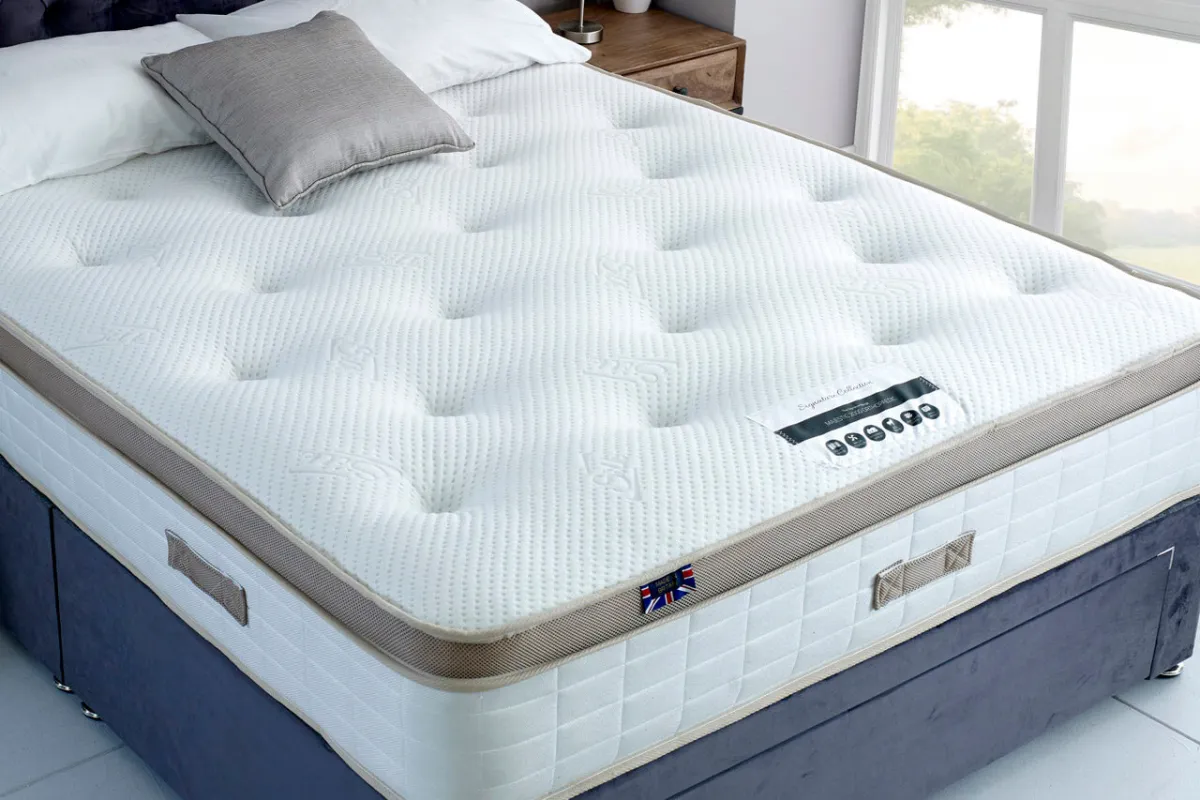 Photo: Mattress World, via mattressworld.co.uk
Your fake sister's mattress shopping journey has officially begun, and Derek is now a character in your life whether you wanted him there or not.
The Inevitable Return
The cruel irony is that six months later, you'll actually need the thing you pretended to shop for. You'll remember Derek and his impressive knowledge of sleep technology. You'll consider going back to that store where someone once cared deeply about your theoretical comfort needs.
But you won't, because that would require acknowledging that your sister was fictional and your family emergency was your alarm clock, and some performances are too elaborate to break character on.
Instead, you'll shop online like a reasonable person, occasionally wondering if Derek ever thinks about the customer who got away—the one with the very particular sister who never quite found the perfect mattress.